Browsing the Internet in the age of AI can be frustrating. Many websites now have a distinctly vibe-coded, AI-slopified feel, from the out-of-place dark-mode palette to the all-caps labels to excessive AI verbiage like “load-bearing spines” and “evidence ledgers,” interspersed with qualifiers like “quietly” and “genuinely.”
AI content often feels hollow and distant, too mechanical, too synthetically written. Its strangeness is only deepened by the fact that one often does not experience this same hollowness with “one’s own” AI outputs. I read “my” Claude daily and receive meaningful, informative, or enlightening responses—certainly, tailored to my experience of reality, but pushing beyond it in new and interesting ways. Used as high-powered search engines, frontier models have become surprisingly useful to think and learn with, an improvement on the hallucination-prone machines of two or three years ago.
So why is one person’s treasured AI output another person’s hollow verbiage? The answer, I think, lies in the relationship the Silicon Valley AI giants have grown adept at forging between user and chatbot through what the French philosopher Louis Althusser called interpellation. In Althusser’s example, when a police officer shouts, “Hey, you there!” only the “hailed” subject turns, knowing that the call was meant for them alone. Similarly, when we read others’ AI outputs, somehow these results don’t feel as resonant as our own: we remain bystanders to the AI’s “hail” and see only the formulaic, mechanical aspects of a text intended for someone else.
Some of this is easy enough to explain: other people’s questions and interests are not our own. But partly, too, it has to do with the great degree of personalization that most AI providers like Anthropic and OpenAI now undertake, with growing memory banks of personal information that get served up as context along with users’ prompts. (Anthropic even offers the ability for users to choose to save “sensitive” information from chats to memory, including political convictions and religious beliefs.) When a user opens their Claude app, they are greeted as if by a friend, and the responses they get are tailored to everything it knows about them. AI companies have figured out how to turn “mere” tools into something closer to companions, and so to turn the use-value of being helped by an instrument into the feeling of being understood by a particular someone.
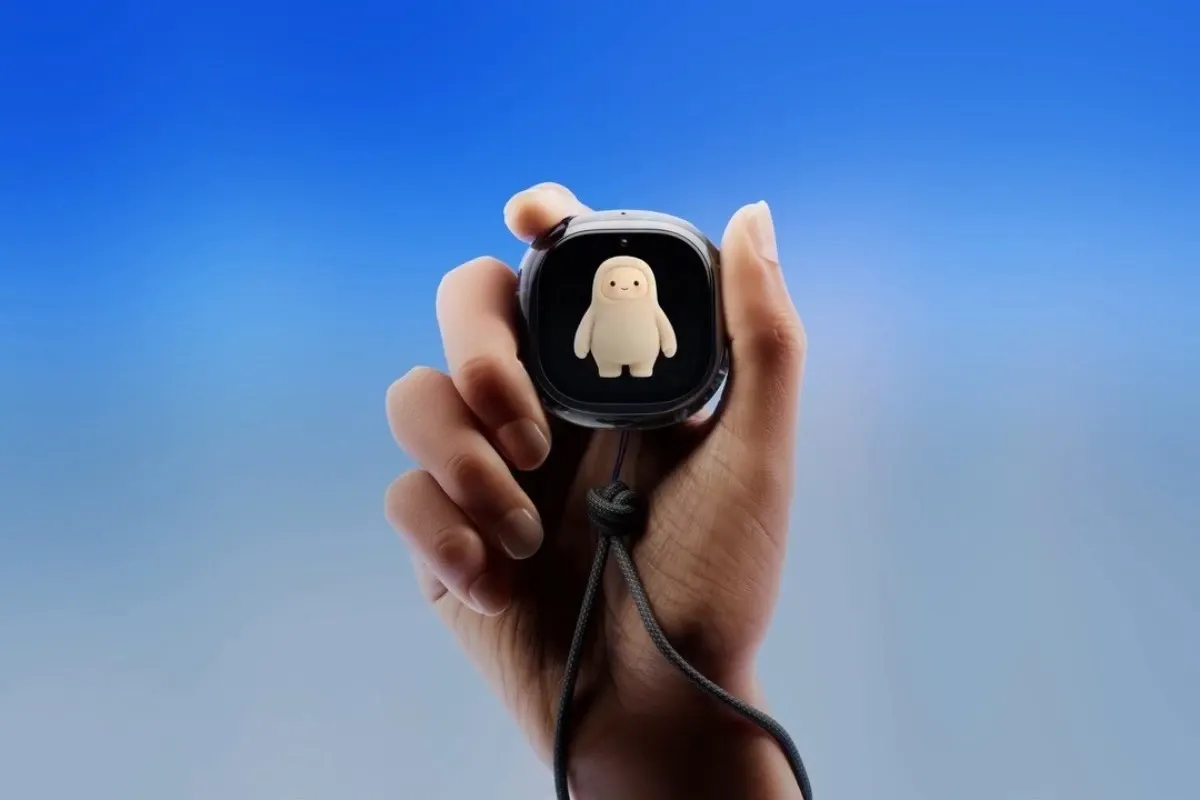
Some have noted that Meta’s forthcoming Muse Charm, an AI-powered wearable, resembles a 2020s version of that 1990s craze, the Tamagotchi; The Verge’s senior AI reporter Hayden Field recently proclaimed that “the AI Tamagotchis are coming.” The Tamagotchi was a small electronic pet-like device that users had to “keep alive” by periodically pressing various buttons to feed it, care for it, ensure it got enough sleep, and so on. The sociologist Sherry Turkle wrote about these toys in her 2011 book, Alone Together, calling them “relational artifacts,” and has extended the analysis to chatbots in her latest book, Artificial Intimacy.
By Tamagotchification, I mean a particular form of gamified, personified tech, which has at least three components: a relationship between user and device, where the user is enjoined to care for the device; a quantified usage meter reflecting the device’s various states; and a daily binding together of user and device, such that the device increasingly occupies the user’s temporal horizon. What glues user and tech together is a kind of emotional imperative.
Of course, nobody is prompting me to keep Claude alive or feed “him.” But the semi-gamified usage meter—the weekly and five-hour usage quotas, the felt need to “get one’s money’s worth” by “feeding” the chatbot with productive, useful prompts throughout the day and week—creates a sort of fusing together of user and chatbot. The hunger is not the agent’s; the hunger is mine, to ensure that I am maximizing throughput: unused subscription quotas are wasted gains.
This quantified, self-optimizing self that AI companies tap into is part of the broader subject-formation that Silicon Valley has long built its business models on, seen in everything from sleep apps to smartwatches. There are elements of Tamagotchification in chatbot design, but also the more familiar capitalist imperatives of continuous throughput, and a neoliberal subjectivity that conditions us to become endless self-optimizers. And it isn’t always clear who the “Tamagotchi” is: the chatbot, demanding more data, or the user, who needs emotional, intellectual, or practical sustenance.
Personalized AI, as distinct from personified AI, can be quite useful: it is valuable to me that Claude “knows” my general interests and intellectual orientation. Where things go wrong is when this memory layer is injected into a persona. AI companies have built personalities, written into the system prompts and trained into the models—in Anthropic’s case through the so-called “soul document,” now dubbed its “constitution.”
While some claim this is what keeps AI morally “aligned,” it also serves another purpose: the emotional attachments encouraged by these personified AIs are a means of extracting value from users. The anthropomorphic tendency both fuses the user to the platform, securing subscription renewals and further token spending, and, crucially, encourages them to share more, and more personal, information that can be collected for further model training unless users opt out. This is closely related to what Shoshana Zuboff calls the harvesting of “behavioral surplus” under surveillance capitalism.
Though we might want AI to be personalized (adapted to the user) without becoming personified (given a pseudo-personality), capturing users in webs of affective investment is by now an established Silicon Valley strategy. Its outward form varies, but the basic logic remains the same: capture attention and time, capture market share and revenue. In the 2010s, the social media giants—“attention merchants,” as Tim Wu has called them—learned to commodify our gaze and extract value from time spent scrolling an algorithmically tailored infinite stream. In the 2020s, the AI giants have increasingly become relational merchants.
At an existential level, anthropomorphic AI invites users to think that they are dealing with something like a person, not a tool. Anthropomorphism is a commodified distortion of a technology that could be far less personal. Of course, it’s hard to imagine a completely “voiceless,” unmediated AI, but its form doesn’t have to be that of a companion. One of the (many) benefits of a truly public, globally funded, open-weights AI model—a cosmopolitan, not “sovereign” AI—is that it could remove the commercial pressure to cultivate attachment, freeing the technology from today’s anthropomorphizing tendencies. A decommodified AI would allow us to move away from Silicon Valley’s personifying extractivism and, instead, to focus on thinking, learning, and making. Give us tools, not fake friends.