The Eyeless Gaze on Gaza

We live in ahyper-factualage, where we know more, with greater speed, about more things than ever before in history.
Essays and book reviews on sociology, politics, and culture.
We live in ahyper-factualage, where we know more, with greater speed, about more things than ever before in history.

“We’ve had enough!” — “There’s no more room!” — “They’reto blame for the housing shortage!” — “They’ve taken all our jobs.” — “Our country isfull.”
Ontocide destroys the will to care about things in the world. Together with politicide and genocide, it forms the “dark triad of occupation”: destroy the state, the people, and meaning as such.
Gaza is being decimated. There are reports of polio virus found in Gaza’s sewage by the World Health Organization (WHO). Mountains of garbage are piling up as basic services have collapsed. The UN reports that clearing 40 million tons of rubble may take 15 years, with housing stock not rebuilt until 2040 at an estimated cost of $40 billion. And as of July 2024, some 39,000 Palestinians have been killed in Gaza. The real body count may prove much higher, given the significant destruction of civil infrastructure by Israel’s armed forces, making recovering and registering fatalities difficult, with thousands likely buried beneath the rubble of the bombed-out enclave.
Overemphasizing Biden’s verbal gaffes risks falling prey to a reactionary politics of the performance: What matters more is the nexus of forces the President surrounds himself with.
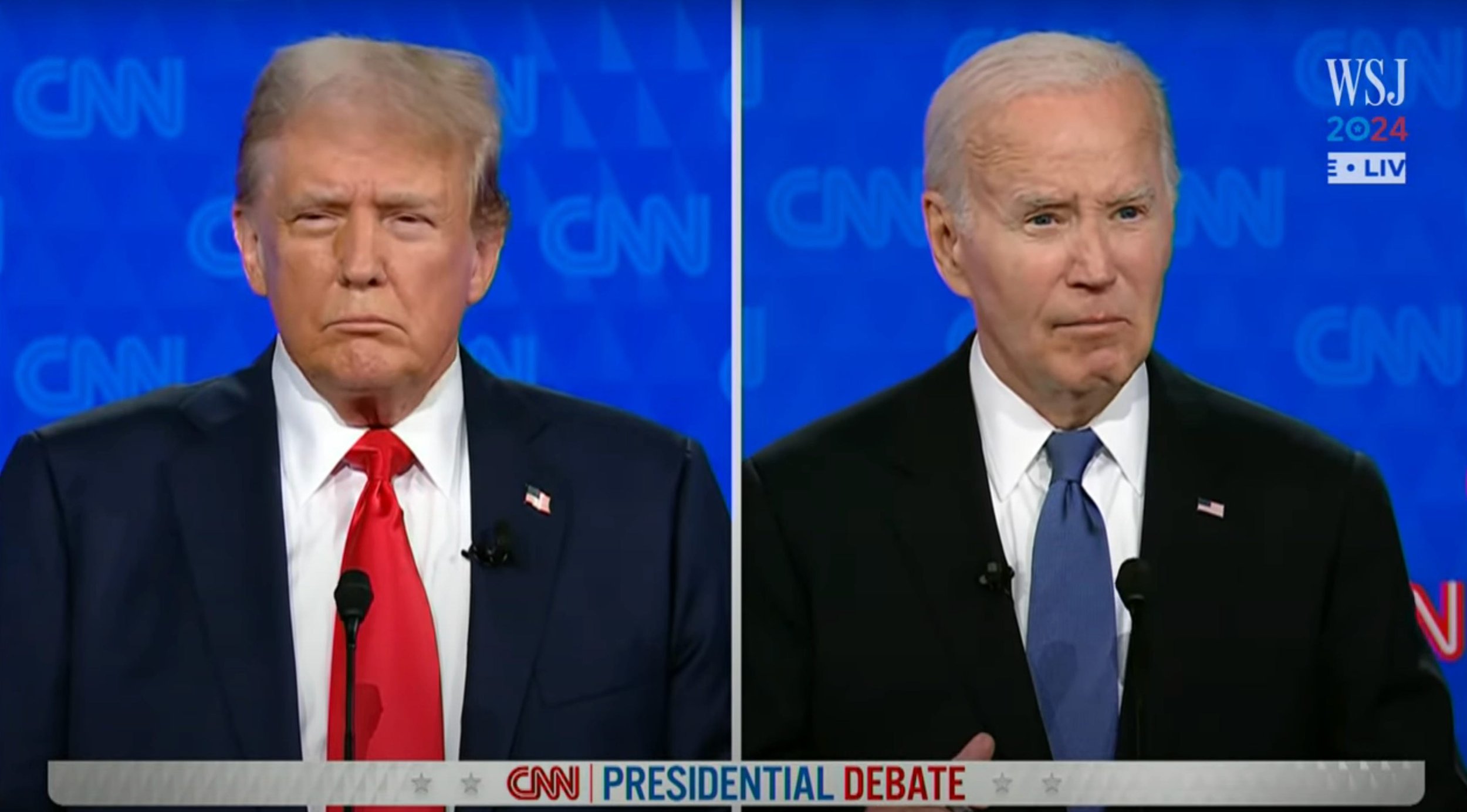
On Friday, the New York Times Editorial Board called for Biden’s resignation from the 2024 presidential race. Recognizing that a call for “ending his candidacy” was an extraordinary step, the Times still lamented “the president’s performance,” noting: “Even when Mr. Biden tried to lay out his policy proposals, he stumbled.”
The somewhat hysterical anti-Biden reactions to the Biden-Trump presidential debate on CNN suggest that we still have an essentially olympic and theatrical relationship to politics, that is, a politics of performance and (implicit) athleticism.
A review of Slavoj Žižek's "Freedom: A Disease Without Cure" (Bloomsbury, 2023)
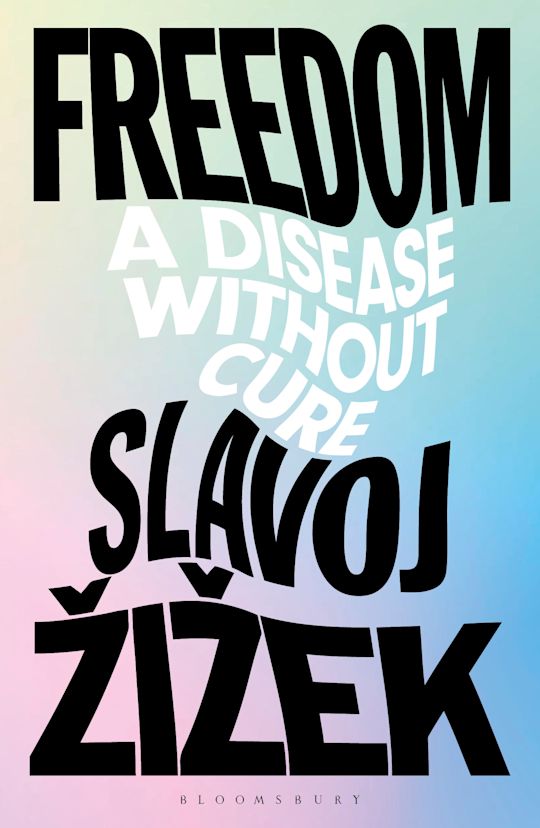
Slavoj Žižek. Freedom: A Disease Without Cure. London: Bloomsbury, 2023. 320 s.
Reviewing a Žižek book is a bit like “dancing about architecture,” to borrow a Frank Zappa quotation. Ideally, a review ought to provide a rational overview of a work’s contents and form. But Žižek unusual prose style resists simplified summary, and many of his most recent works are, if not formless, then at least formally idiosyncratic—more like patchworks of loosely interwoven textual fragments than formal or even sustained argument. With strands of text that have been recombined, reused and (occasionally subtly) rewritten, his texts at times seem to draw more upon Burroughs’ “cut-up” collage technique than the Western canon of philosophy, redolent of the free-associating analysand on the couch giving free rein to their thoughts: One idea succeeds the next, certainly, but the sum of it all is naturally quite fragmentary.
It is increasingly recognized that large language models (LLMs) are prone to erroneous outputs, a phenomenon known as hallucinations. As AI spreads ever wider into the technological substrate of late modernity—summarizing news stories, synthesizing search results, condensing research papers, speeding up office worker productivity, and so on—the hallucinatory effectsof AI are only likely to grow more consequential.
To give just one relatively innocent example: In 2022, Google announced that it was deploying its Multitask Unified Model (MUM) to produce “snippets,” or brief summaries, of search results. So how’s it faring? Say you want to learn whether Switzerland is a member of the European Union. You might plausibly search for a phrase like “Switzerland EU.” As of May 2024, the phrase results in the following Google-manufactured summary of a Wikipedia page devoted to Switzerland-European Union relations: “Switzerland is a member state of the European Union (EU).”
Social democracy may be the solution to the problems of some fortunate subset of individual nations, but it is not a solution for the world as such—that is, to collective global problems and to the problems of poorer nations around the globe today. Instead, social democracy—so I argue in a forthcoming publication—fundamentally hinges on the preservation of difference, and in many cases the active production and acceleration of differences between nations, for internal, nationally-bounded ends.[1] Social democracy is, finally, about furthering the well-being of a nation’s own citizens—and by extension, a given state’s own national interests. If everyone were to become a high-functioning Nordic welfare-capitalist society, for instance, the difference-reliant components inherent to the social-democratic model of political economy would in short order begin to break down.
I have just completed writing a chapter destined for an edited volume published by an academic press. Because the topic is a specialist one, unlikely to attract a general readership, I won’t delve into the details of the argument (though interested readers can consult the draft here)[1], which is about how societies deal with crime and punishment, and how they structure the policymaking processes around crime control and imprisonmnet. That might not sound very abstruse, but, alas, it is (for substantially defensible reasons, I claim).
The puzzle of a murderous dictator who was also a voracious reader remains unsolved despite the author's efforts.
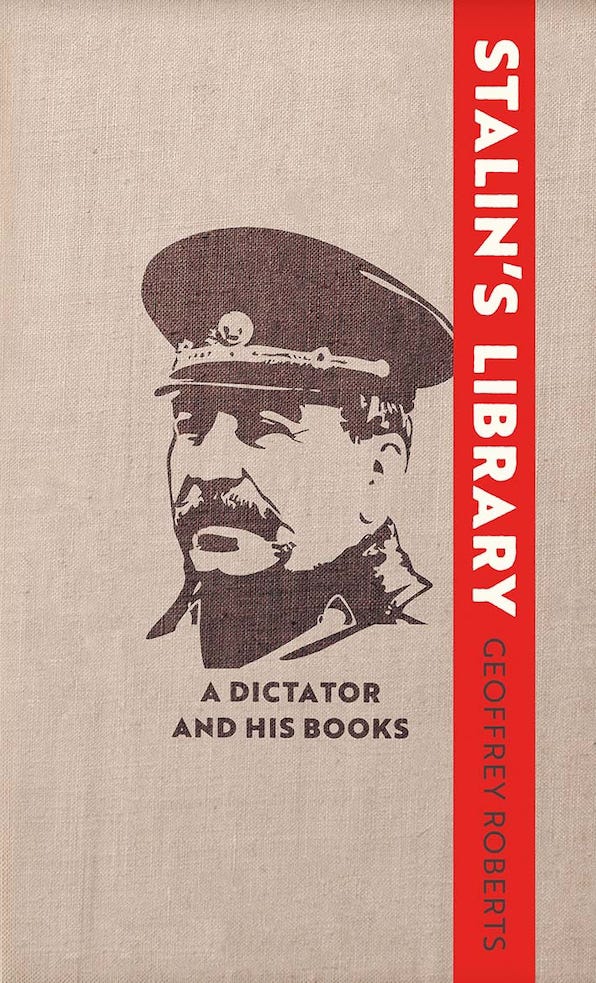
Geoffrey Roberts (2022), Stalin’s Library: A Dictator and His Books. New Haven: Yale University Press.
One of the many surprising facts about Stalin’s life was his bibliophilia, verging on bibliomania. The man “responsible for about a million purposive killings,” on one historian’s estimate, was a voracious reader, accruing over 25,000 volumes in his personal library. From his austere Kremlin office, where he spent his days crayoning official documents with _nyet_s, question marks, exclamation points, and (chilling) onomatopoietic laughter—with scribbles of “ha-ha-ha” occasionally forewarning an unfortunate author’s imminent departure to the Gulag—and in between running the sprawling Soviet state apparatus, Stalin somehow found the time to accrue and read thousands of books.
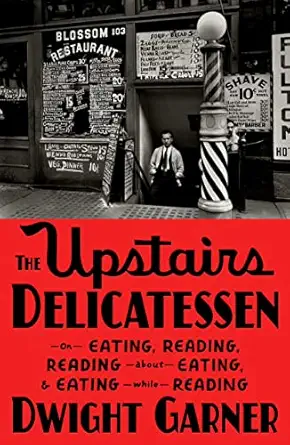
Dwight Garner (2023), The Upstairs Delicatessen: On Eating, Reading, Reading About Eating, and Eating While Reading. New York: Farrar, Strauss and Giroux.
There’s much jocularity in The Upstairs Delicatessen, New York Times book critic Dwight Garner’s witty, if meandering, literary-cultural commentary on two seemingly unlikely topics: novels and eating. Garner’s Delicatessen, as the subtitle lightheartedly proclaims, is a book “on eating, reading, reading about eating, & eating while reading.” But while nominally weighing in on literature and food, the book is also a poignant meditation on meatier topics, like class, culture, place, and power.