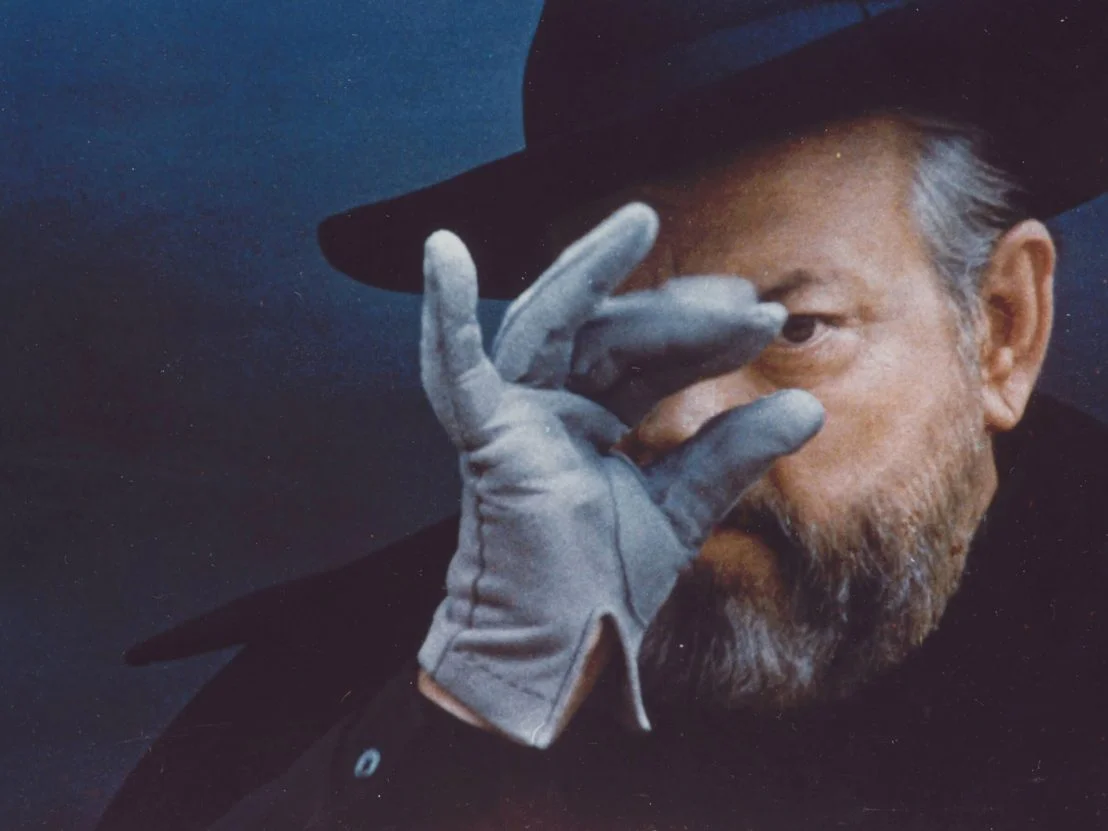
F For Fake (1973). Director: Orson Welles. Runtime: 1h 35m. [Youtube]
It is extraordinarily difficult to know what to make of Orson Welles’s F For Fake (1973), which constantly threatens to splinter, to shatter in on itself, much like the famous mirror scene in his much earlier effort, The Lady From Shanghai (1947), cutting hither and thither, never allowing the viewer to rest in anything resembling epistemic certainty. Here is Welles’s foray into the genre of the mockumentary, avant la lettre, which he must be said to have invented with Fake. It may also be considered, as some critics have postulated, an essay film (some claim Welles said so himself, though this is probably apocryphal, fittingly for a film about the uncertainty of knowing). But to place it in this category presupposes that, as in an essay, there is a clear thesis being advanced. The key to understanding the late, mature Welles, however, is to recognize his absolute lack of self-seriousness, seeming to exclude anything quite so ponderous as an argument or thesis.